Products for this system
Manufacturer data, coverage figures and data sheets for the products we supply in Botswana.
Bonding agents, grouts, sealants, floor hardeners and protective coatings — what each category does, and how to choose the right product for the job.
Construction chemicals are the products that hold a project together, protect it, and keep it performing long after the visible finishes are down — bonding agents, repair mortars, grouts, sealants and protective coatings used throughout the build process, not just on the surface. They're easy to overlook on a specification because they're rarely the "hero" material, but getting one wrong — the wrong grout consistency, an unsealed joint, a missing bonding coat — is a common source of defects that surface months or years later.
Tswanacrete is the authorised ABE Construction Chemicals distributor in Botswana. This guide walks through the main categories, what each is actually for, and how to think about choosing between them.
Tswanacrete stocks core products across ABE's main construction chemical categories in Gaborone. See our Construction Chemicals page for the full product list.
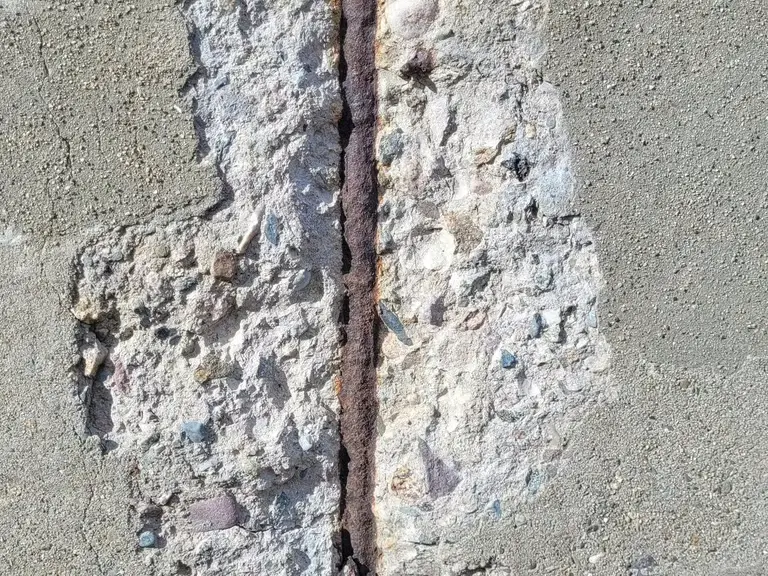
Used to reinstate and bond damaged or worn concrete. Structural epoxy adhesives bond fresh concrete to existing concrete; acrylic emulsion primers serve as a bonding medium ahead of cementitious repairs. See our Concrete Repair Guide for the correct repair sequence.
Dry-shake hardeners floated into freshly placed concrete produce a hardened surface for indoor and outdoor floors under light to moderate traffic. Granolithic-type toppings using hard-wearing aggregates suit surfaces under extreme wear internally or externally.
Ready-for-use Portland cement-based grouting compounds with graded siliceous aggregate, used for bedding column base plates, machinery base plates and bearing plates. Consistency can be adjusted from flowable to ram-to-suit depending on the application — this is what separates a grout from a repair mortar.
One-part, non-sag silicone sealants that cure to a low-modulus rubber on exposure to atmospheric moisture, applied over a wide temperature range, for movement joints and general construction sealing where a flexible, weather-resistant joint is required.
Cementitious waterproofing coatings that protect concrete structures by crystallisation, recommended for interior and exterior below-grade surfaces. Flexible slurries protect and repair balconies, terraces and haunching concrete on roads and bridges. These are chemical-system products distinct from roof membrane systems — see our Waterproofing & Structural Repair page for those.
One-pack, aluminium-pigmented bitumen solutions used as a general-purpose reflective coating on metallic, bituminous and concrete surfaces — not recommended for surfaces subject to permanent immersion.
Construction chemicals are application-specific — there's rarely a single "default" product across categories.
Bonding, filling, sealing, hardening and protecting are different jobs. Start by naming the function needed before looking at specific products.
Flowable, pourable, trowel-applied or ram-to-suit — the placement method available on site narrows the product choice considerably.
Permanent immersion, UV exposure, chemical contact, or movement all rule certain products in or out — check this against the data sheet, not assumption.
Concrete-to-concrete, metal-to-concrete, and joint-to-joint each call for a different chemistry — a general-purpose product is rarely the strongest performer for a specific substrate pairing.
If you're not sure which category applies to your situation, describe the application and substrate to our team and we'll match a suitable ABE product, with the data sheet to confirm it.
General principles that apply across most construction chemical categories.
Surfaces must be clean, sound and free of contamination — laitance, oil, dust and loose material all compromise bond strength.
Two-part products need accurate ratios and thorough mixing; under- or over-mixing affects both working time and final strength.
Pot life and cure speed are temperature-dependent — hot conditions shorten working time significantly, relevant across most of the year in Botswana.
Grouts and mortars need to be placed without trapping air voids, particularly under base plates where full contact is structurally important.
Products need protection from rapid drying, rain or trafficking during their specified cure window before being put into service.
Exact mixing ratios, coverage rates and cure times vary by product and must be confirmed against the current ABE data sheet. Tswanacrete supplies this documentation with every order.
Repair mortars are formulated for a stiffer, trowel-applied consistency — forcing one into a confined grouting gap often leaves voids.
Assuming fresh concrete or mortar will adhere to an old substrate without a bonding agent, leading to early debonding.
Sealing a joint designed to move with a rigid product instead of a flexible sealant rated for the expected movement.
Using a general-purpose sealant in a joint subject to permanent water contact or aggressive chemicals instead of a product rated for that exposure.
Applying a coating or topping over a chemical without confirming the two systems are compatible, risking adhesion failure or a chemical reaction between layers.
Construction chemicals are the specialised products used to bond, repair, grout, seal and protect a structure — as distinct from bulk materials like cement, sand or bricks.
In most repair and topping situations, yes. Confirm the correct bonding agent for your specific application against the manufacturer data sheet.
Grouts are typically flowable or pourable for filling gaps under base plates, while repair mortars are trowel- or hand-applied and formulated for a stiffer, buildable consistency.
Yes. Describe the application, substrate and exposure conditions, and our team can match a suitable ABE product, backed by the manufacturer data sheet.
Damage types, the correct repair sequence, and why repairs fail.
System types and why waterproofing and concrete repair go together.
The full ABE range Tswanacrete supplies, and why buy through us.
Describe the application and substrate, and we'll confirm the correct ABE product and a written quotation in Botswana Pula.
Manufacturer data, coverage figures and data sheets for the products we supply in Botswana.